
Cozy Games for When Life Feels Out of Control
Small, satisfying cozy games that give me something manageable to focus on when real life feels messy, uncertain or completely outside my control.
Sometimes life just feels completely outside your control. Plans change, something you’re waiting for takes forever, work gets messy, money becomes stressful or someone else makes a decision that affects you and there isn’t really anything you can do about it.
Those aren’t always the times when I want a game that lets me completely switch off, though. When I’m overwhelmed, I usually want less noise, fewer decisions and something that asks very little of me. When life feels out of control, I often want something slightly different. I want something I can actually do something about.
Give me a messy room I can organise, a dirty wall I can clean, a tiny street I can improve or a broken object I can repair. I want to make a decision and see an immediate, understandable result from it.
Obviously, putting books on a virtual shelf isn’t going to fix whatever is happening in real life. Cozy games aren’t therapy and they can’t make difficult circumstances disappear. But sometimes it feels good to spend an hour somewhere smaller, where the problems are contained, progress is visible and I actually know what I’m supposed to do next.
These are the cozy games I reach for when life feels out of control and I just want one small piece of it to make sense.
Looking for More Cozy Games?
Need even more gentle games to add to your list? I’ve put together The Ultimate Cozy Games Directory, with 200+ cozy games across Nintendo Switch, PC, PlayStation, Xbox, Apple Arcade and mobile. It’s a good place to start if you want to browse by console, genre or mood.
👉 Browse the full Cozy Games Directory
I also have a full Cozy Games for Mental Health collection, with comforting games for anxiety, burnout, stress, sleep, loneliness, low-energy days and those times when real life feels a bit too much.
When I Need Everything to Have a Place
There’s something particularly satisfying about taking something messy, working through it bit by bit and eventually reaching a point where I can look at it and think, right, that’s sorted. Sometimes the thing I’m looking for isn’t relaxation exactly. It’s order.
Unpacking
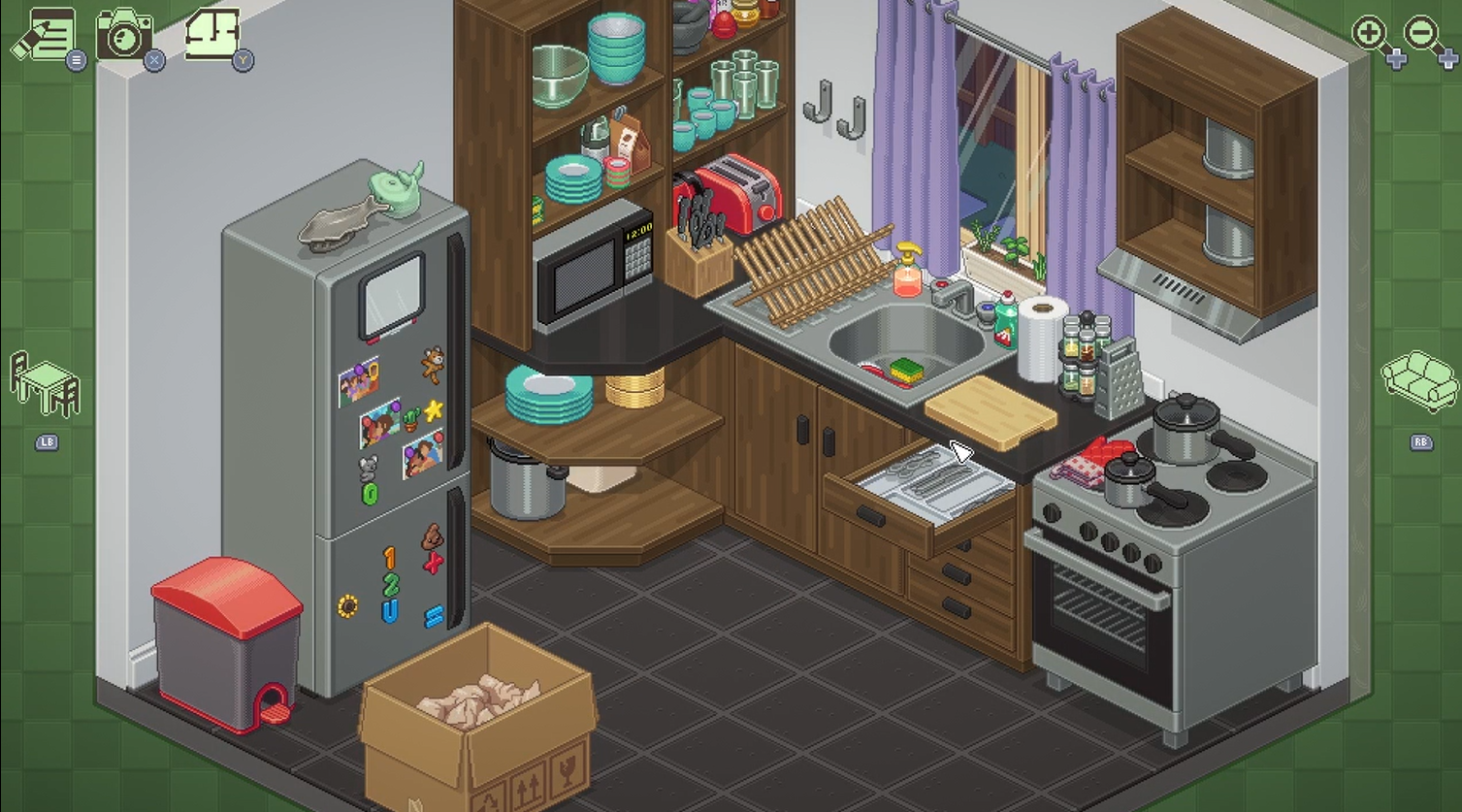
Game Image: Unpacking, Developer Image: Witch Beam
Unpacking is built around something incredibly simple, taking objects out of boxes and finding somewhere for them to live. Slowly, an empty room becomes organised and familiar, with everything finding its place one item at a time.
I think that simplicity is exactly what makes it work when everything else feels messy. There’s a clear task in front of you and you can actually finish it. Books go on shelves, cutlery goes in drawers and clothes get put away, with every object making the room feel a little more complete.
There’s also a story quietly running underneath all that organisation. You move through different stages of someone’s life, learning about relationships, changes and new beginnings through the things they own and the spaces they move into. It gives all that sorting a bit more meaning without taking away from how satisfying it is just to put everything where it belongs.
When real life feels scattered, I really like games that let me focus on one small, manageable thing at a time, and Unpacking does that brilliantly.

Game image: A Little to the Left, Developer Image: Max Inferno
A Little to the Left gives me a very similar feeling, but in a more puzzle-focused way. You straighten pictures, organise drawers, arrange books and spot patterns hidden in collections of ordinary household objects.
Some of the puzzles can get surprisingly fiddly, so I wouldn’t necessarily choose it on a day when my brain is completely exhausted. But when I’ve got that restless feeling where I desperately want to sort something out, it works really well.
There’s something satisfying about starting with a slightly chaotic collection of objects and slowly bringing everything into order. It’s not fixing anything important, but when everything else feels messy, sometimes organising a drawer full of virtual cutlery is enough to give my brain somewhere else to focus for a while.
When I Need One Problem I Can Actually Fix
When there are several big things happening in real life that don’t have straightforward answers, I find it really comforting to be handed one obvious problem and know exactly what I’m supposed to do about it.
Powerwash Simulator
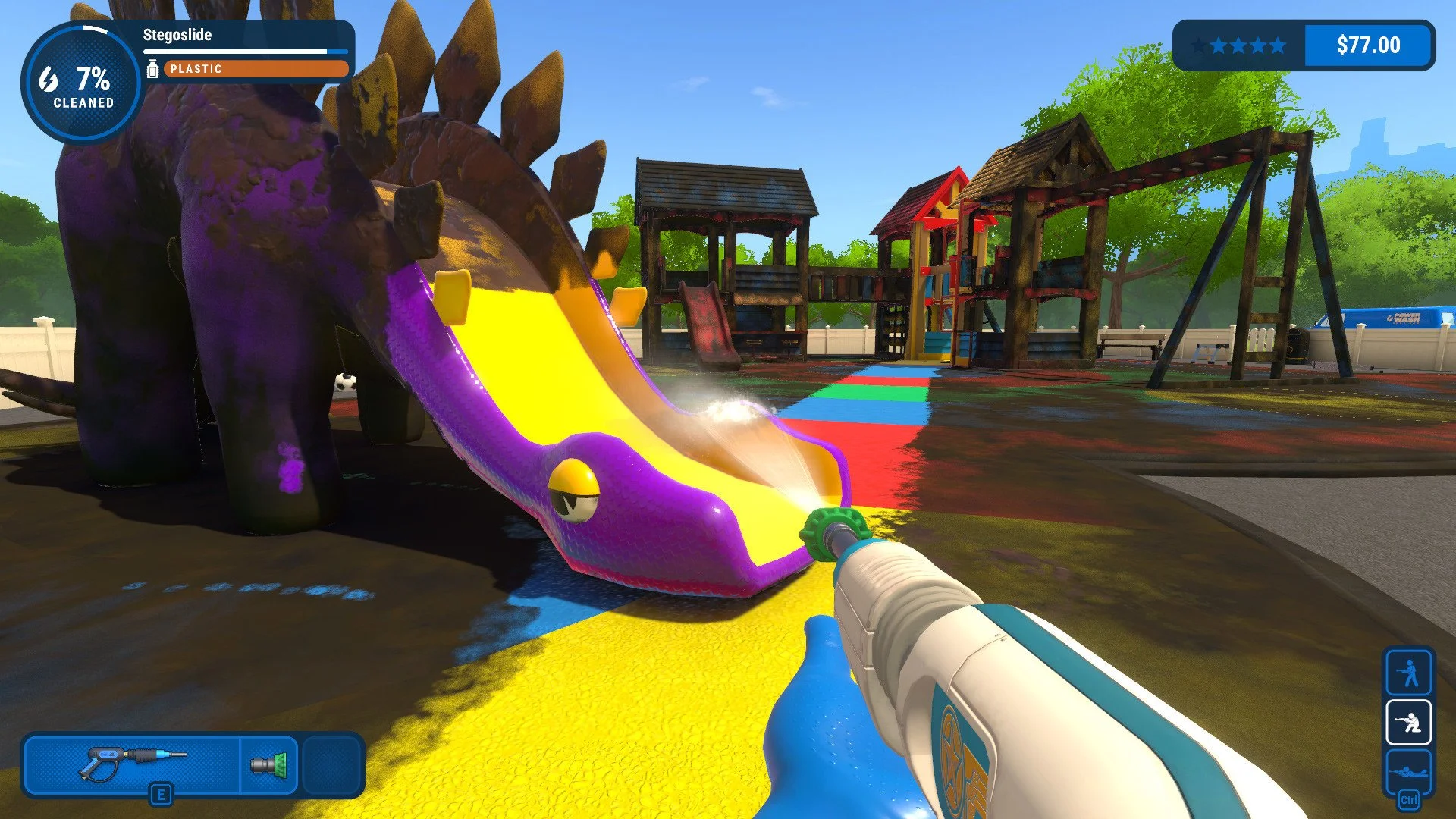
Game Image: PowerWash Simulator, Developer Image: FuturLab
PowerWash Simulator is basically built around visible progress. Something starts filthy, you clean it and eventually it isn’t filthy anymore. That really is most of the game, but I think that straightforward cause and effect is exactly what makes it so satisfying.
You can focus on one tiny section at a time, watching the dirt disappear while the completion percentage slowly creeps upwards. There’s no wondering whether you’re getting anywhere because you can see what you’ve changed.
I find that really useful when everything else feels uncertain. You’re given a task with a clear beginning and end, and every few minutes there’s another little section that’s finished. Nothing complicated is happening in the background and there isn’t much to second-guess. You just keep cleaning until the job is done.
Loddlenaut
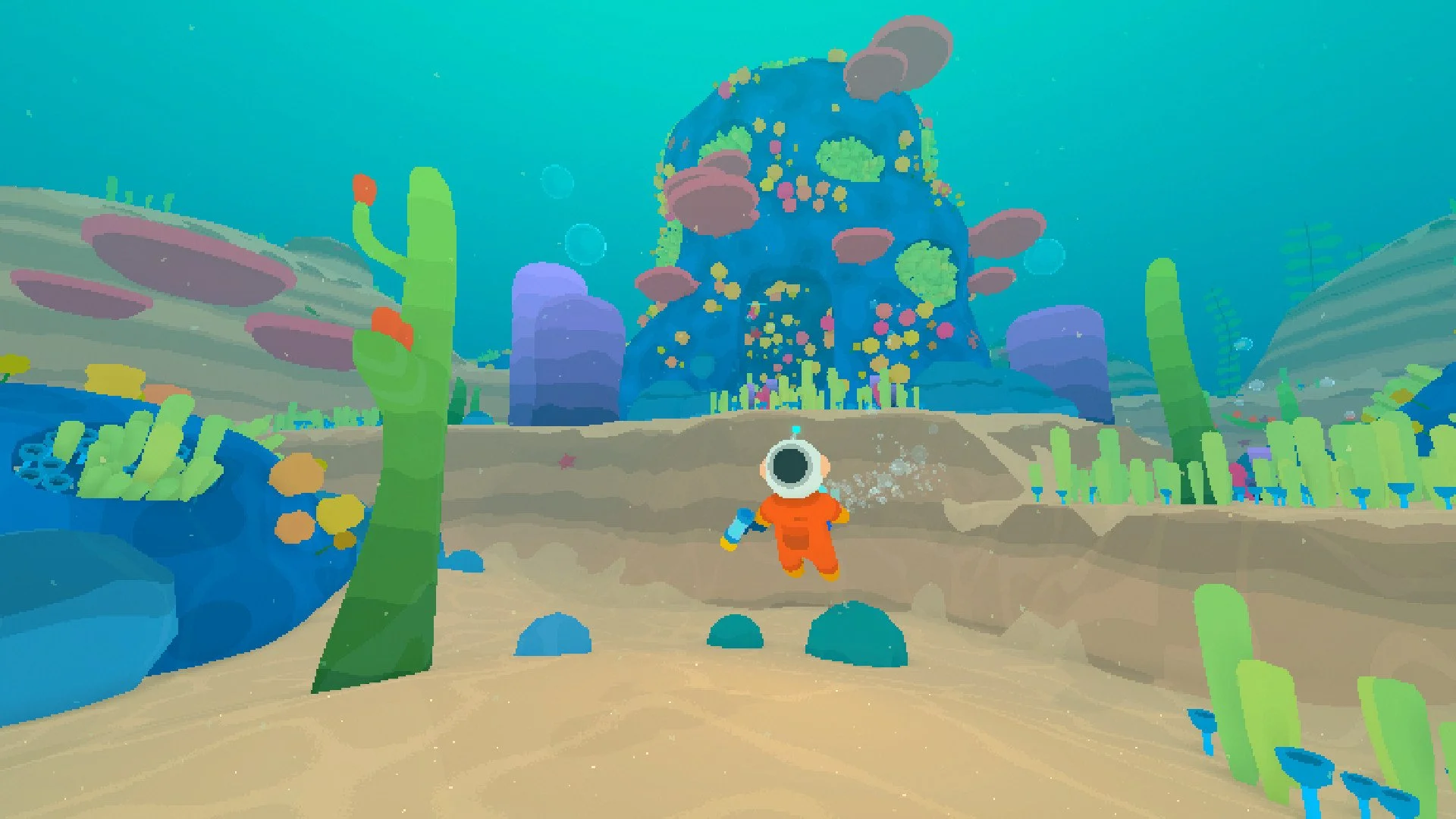
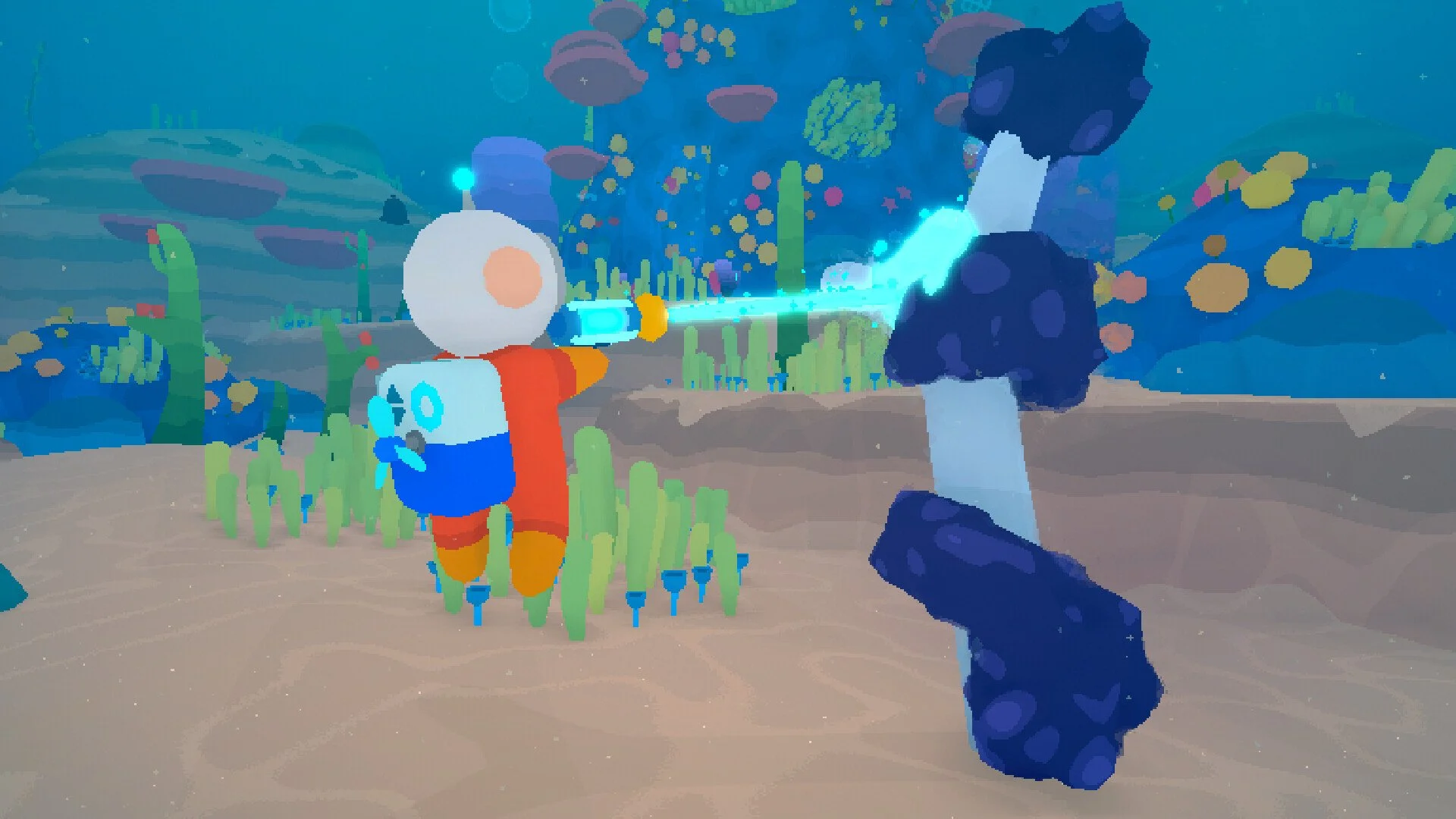
Game Image: Loddlenaut, Developer Image: Moon Lagoon
Loddlenaut drops you onto an ocean planet that has been left covered in pollution, with rubbish scattered across the seabed and its little aquatic creatures struggling in damaged habitats. Most of your time is spent cleaning things up, collecting and recycling waste, and gradually restoring each area.
I found the progress in Loddlenaut particularly satisfying because you can actually see the environment changing as you work. Murky, cluttered areas become cleaner and brighter, plants start returning and the Loddles begin thriving again. There’s always something small and obvious to focus on, whether that’s clearing one patch of rubbish, recycling what you’ve collected or helping restore a particular habitat.
That works really well for me when life feels messy because the problems in Loddlenaut are manageable. I don’t need to solve everything at once. I can clean up one little section, see that I’ve made a difference and then move onto the next.
There’s something very comforting about a game where taking care of one small part of the world genuinely makes it better.
Assemble with Care
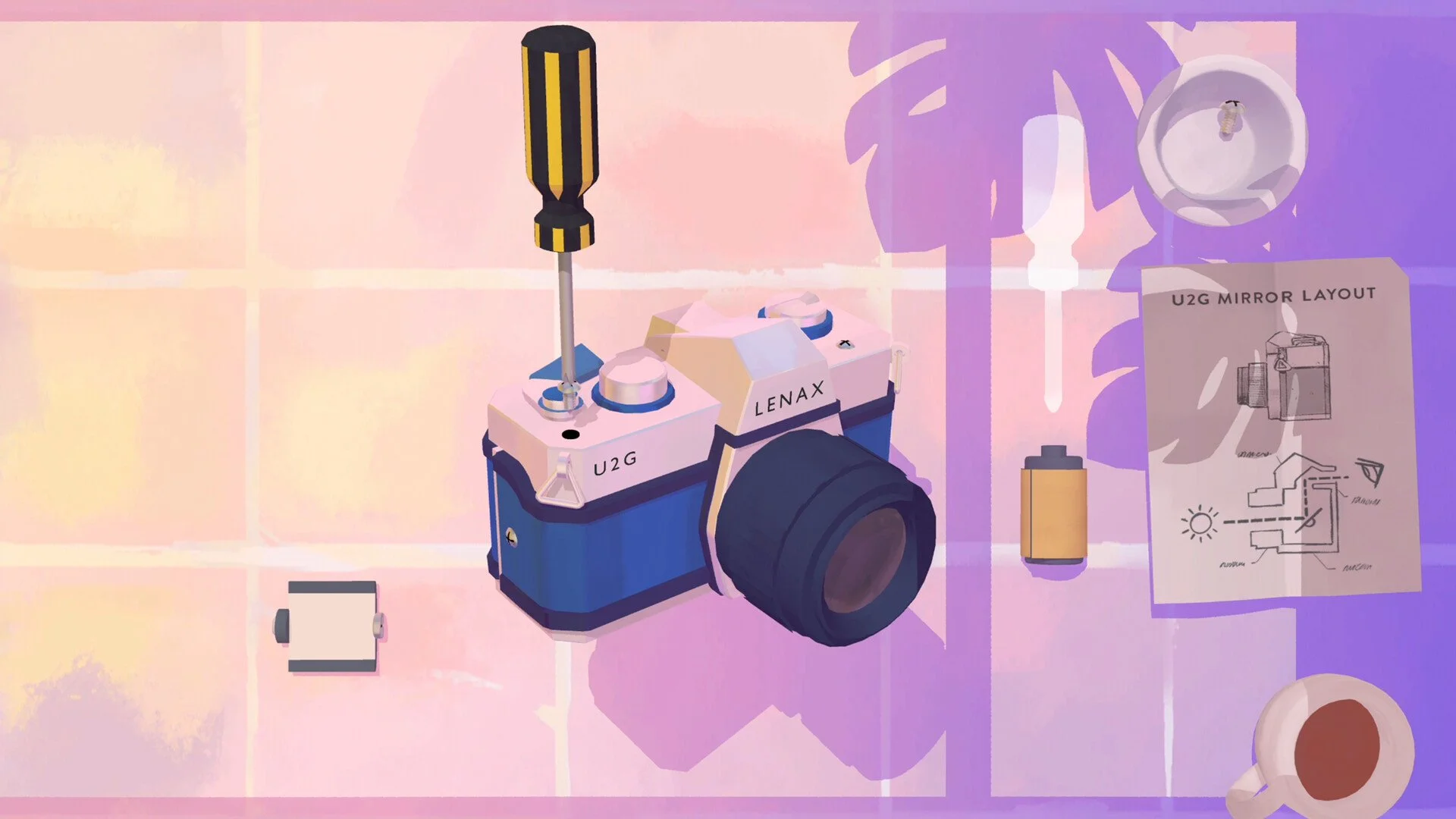
Game Image: Assemble with Care, Developer Image: Ustwogames
Assemble with Care focuses on much smaller problems, with each chapter asking you to repair an individual object by taking it apart, figuring out what’s wrong and carefully putting it back together again.
There’s a story underneath it about Maria, an antique restorer who arrives in Bellariva and begins repairing possessions that matter to the people who live there. But for this particular feeling, it’s the hands on process of fixing each object that really works for me.
You only have one thing to deal with at a time. You can look at the pieces, work out how everything fits together and gradually get it working again without anything else competing for your attention.
When my brain is already full of things that don’t have simple answers, there’s something really satisfying about being given a small problem that actually does.
When I Need a Tiny World I Can Manage
There are also times when I don’t want fewer responsibilities. I just want responsibilities that are fictional, contained and a lot more manageable than the real ones.
Management games work particularly well for that because they give me things to think about without any of it really mattering once I close the game.
Minami Lane
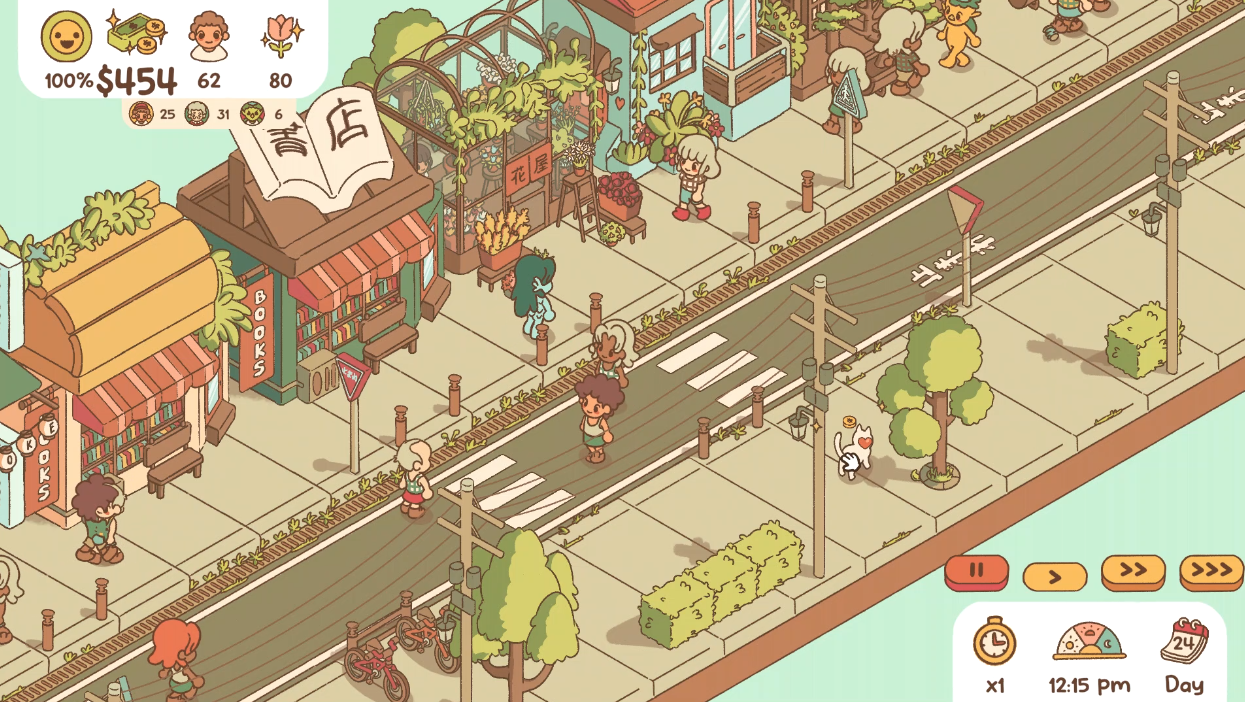
Game Image: Minami Lane, Developer Image:
Doot, Blipboop
Minami Lane probably represents this feeling better than almost anything else on the list. You’re given one small Japanese-inspired street and gradually have to make it work, adding shops, adjusting recipes and stock, listening to what residents want and improving the neighbourhood through a handful of clear objectives.
The world is deliberately small, and I think that’s a huge part of its appeal. If residents aren’t happy, you can usually work out why. If a shop isn’t performing properly, you can change something. If the street needs improving, there’s normally a clear action you can take.
I like that the decisions have understandable consequences. When real life is being particularly unpredictable, spending a few hours somewhere where the feedback actually makes sense can feel surprisingly good.
The fact that there are cats hidden throughout the street to find and pet also helps.
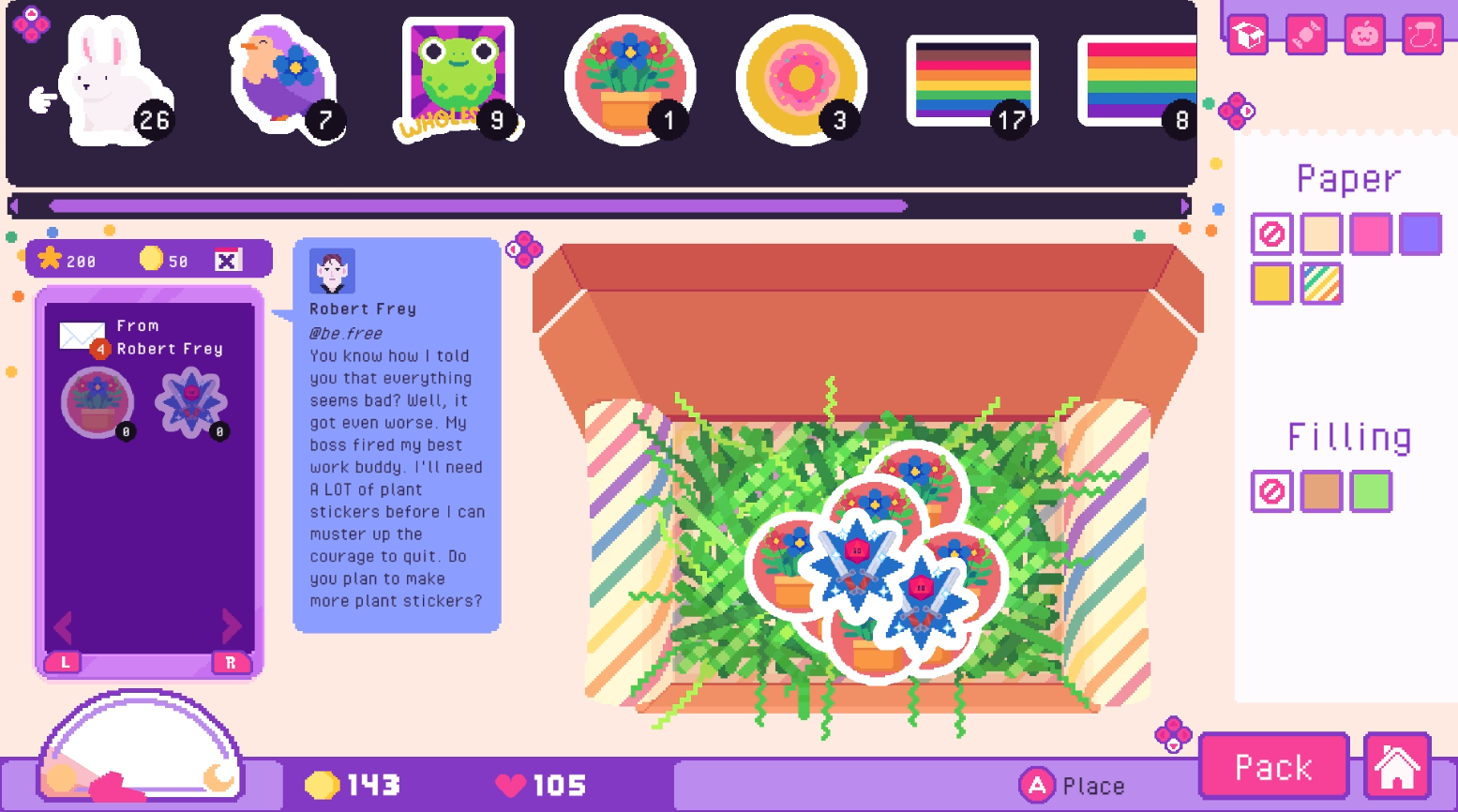
Game Image: Sticky Business, Developer Image: Spellgarden Games
Sticky Business gives me the same feeling on an even smaller scale. You design stickers, turn them into products, receive customer orders, print everything, package it up and send it out.
I really like how contained that loop is. An order arrives, I know what needs to go into it, I pack it and it’s done. Then I move onto the next one.
There’s enough creativity involved to keep it interesting, but enough structure that I always know what I’m working towards. I can spend ages making new sticker designs if I feel like it, or just concentrate on filling orders and watching the little pile of jobs disappear.
On days when real life feels like one enormous unfinished to do list, there’s something quite satisfying about completing lots of tiny fictional ones instead.
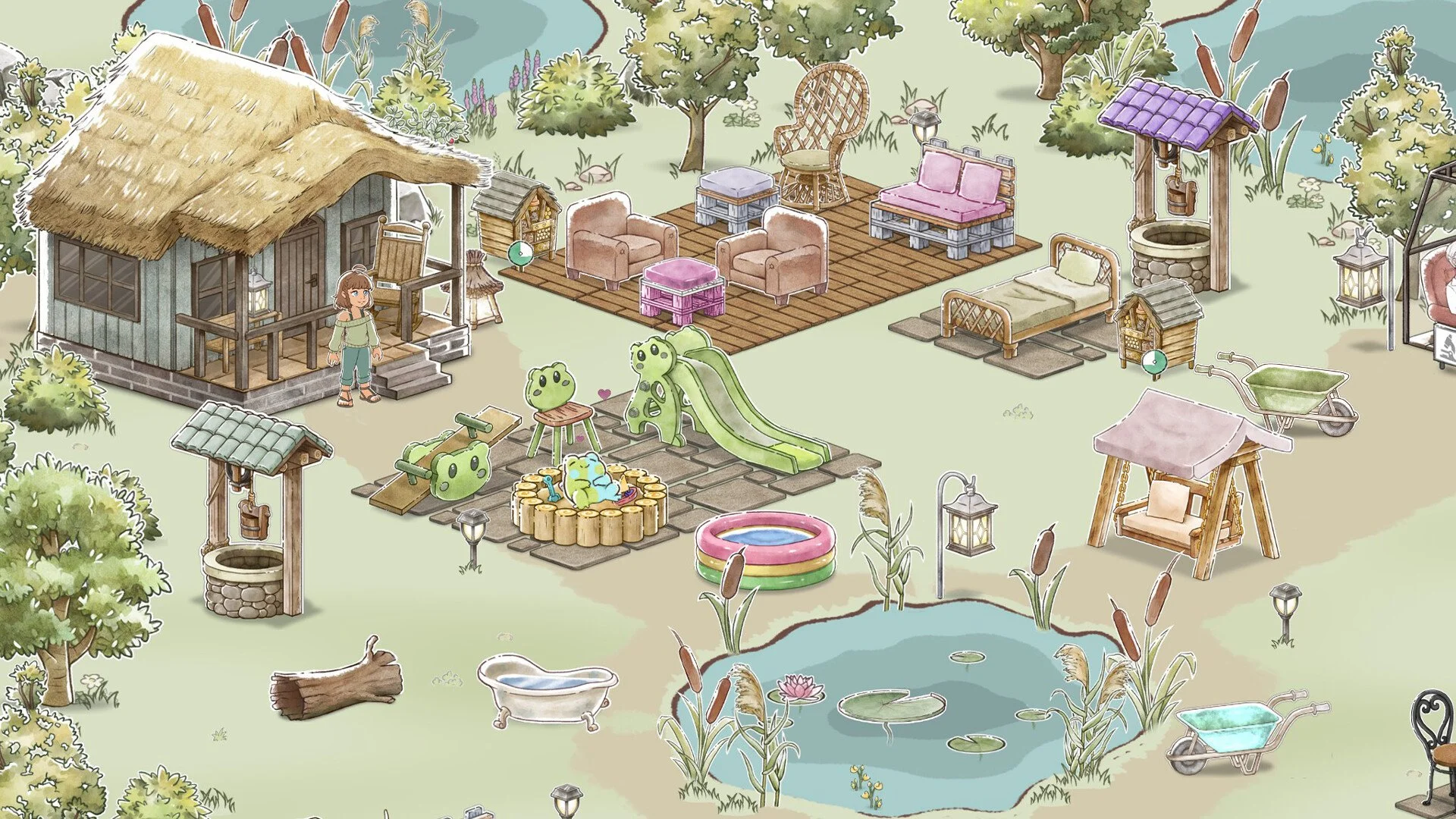
Game Image: Kamaeru: A Frog Refuge, Developer Image: Humble Reeds
Kamaeru gives you a slightly different kind of project to work on. Instead of running a shop or fixing a room, you’re restoring a wetland and gradually creating a refuge where more and more frogs can thrive.
The progress is gentle but very visible. Habitats improve, new frogs appear, collections slowly fill up and the ecosystem becomes livelier as you put more time into it.
I think that balance works really well when I want something structured but don’t want to feel pressured. There’s always another small thing I can work towards, but none of it feels particularly urgent.
It gives me enough direction to stop my brain wandering back towards whatever I’m worrying about, without giving me so much to manage that it starts feeling like work.
The frogs obviously don’t hurt either.
When I Need a Routine That Makes Sense
Feeling in control doesn’t always mean fixing or organising something. Sometimes it’s just knowing roughly what’s going to happen next.
When life feels unpredictable, I find familiar routines really comforting, especially in games where I can settle into the same rhythm without constantly having to decide what I should be doing.
Cozy Grove

Game Image: Cozy Grove, Developer Image: Spryfox
Cozy Grove is built around checking in each day and doing a manageable amount. You visit the island, talk to its ghostly bears, complete a handful of tasks, collect a few things and slowly bring more colour back to the world around you.
What I like most is that eventually there isn’t much else you need to do. A lot of games are designed to keep pushing you towards the next quest or objective, whereas Cozy Grove is quite happy to let you potter around for a while and come back tomorrow.
That makes the routine feel dependable rather than demanding. When the rest of the week feels unpredictable, I like knowing that this little island will still be there with a few straightforward things for me to do.
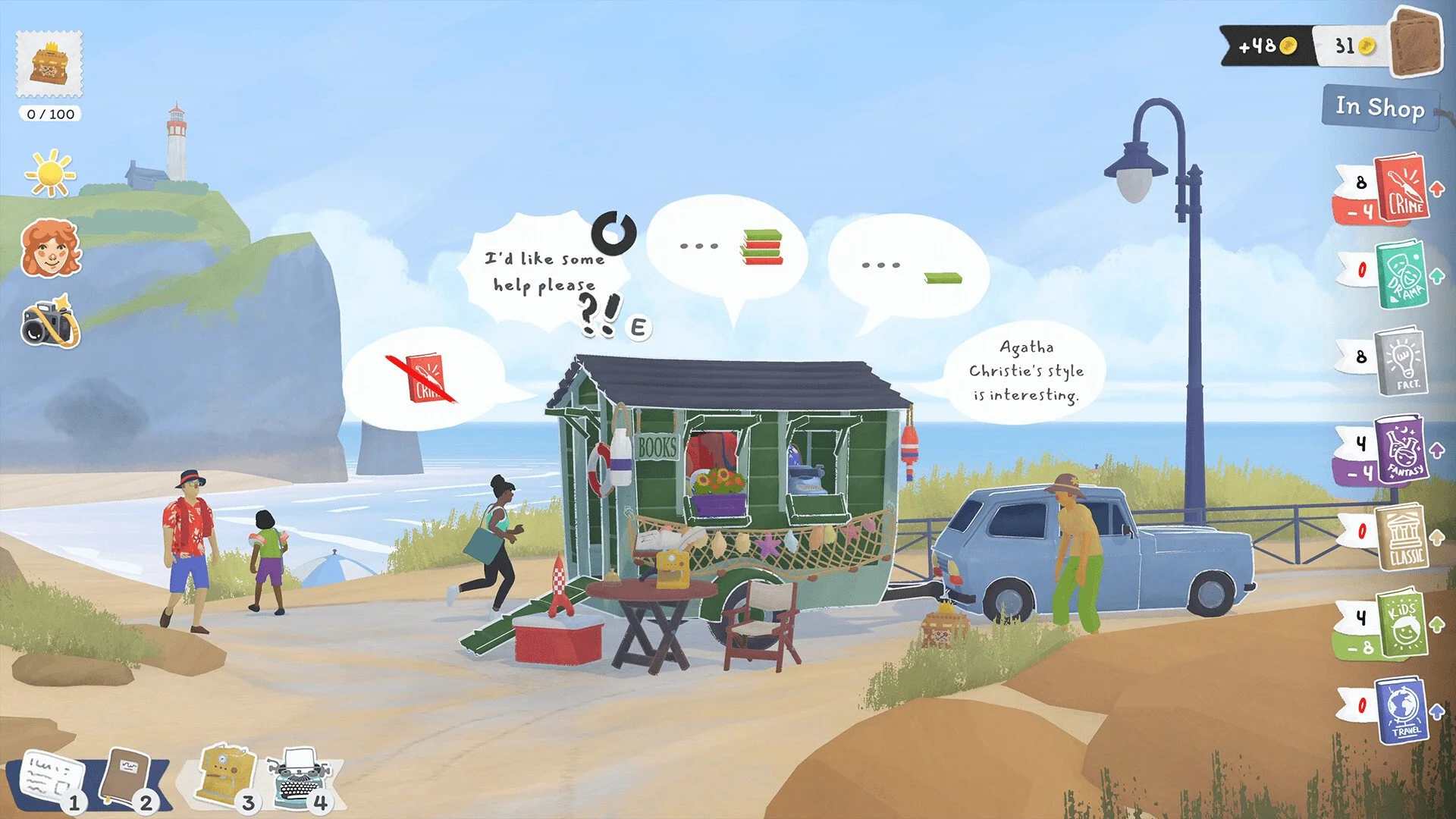
Game Image: Tiny Bookshop, Developer Image: neoludic games
Tiny Bookshop gives you a similar sense of routine, but with a little more management involved. You choose where to take your mobile bookshop, set up for the day, arrange your stock, meet customers and try to recommend books they’ll actually enjoy before packing everything away again.
There are decisions to make, but everything happens within a really pleasant daily rhythm. That’s one of the things I like most about management sims in general. They give me systems to think about and little problems to solve, but all of those problems stay safely inside the game.
Tiny Bookshop is also good at making small progress feel worthwhile. You sell a few books, get to know someone a little better, change your stock, decorate the shop and then start again somewhere new the next day.
Nothing needs to be transformed all at once, and sometimes that’s exactly the kind of pace I need.
When Life Still Isn’t Sorted Afterwards
Of course, eventually I turn the game off and whatever was happening beforehand is still there. The thing I was waiting for might still be unresolved, the difficult decision might still need to be made and organising someone’s virtual kitchen has unfortunately not fixed any of it.
But I don’t think that’s really why I play games like these.
For me, they’re comforting because they give me one small thing I can do something about for a while. It might be a shelf I can organise, a room I can clean, a broken object I can repair or a tiny street where I can look at a problem, make a change and actually see what difference it made.
That little bit of order doesn’t solve anything outside the game, but sometimes it gives my brain somewhere else to go for an hour and wind down.
When life feels particularly uncertain, I don’t always need another thing telling me to relax. Sometimes I just want something small that makes sense.
If you have a game you reach for when life feels outside your control, I’d love to know what it is in the comments. 💚
More From The Mental Health Collection…


Affiliate Reminder: I may earn a small commission if you purchase through any of the links in this post. Thank you for your support! 🫶

When I’ve spent all day making decisions, sometimes I want a game that simply gives me one thing to do. These 10 cozy games are my picks for decision fatigue, with simple tasks, small puzzles and very little pressure to work out what comes next.